Overview Show
The Lotus Lantern Festival is not a single event happening in a single place on a single night. It is two distinct festivals in two cities, with two entirely different atmospheres — and a participation option most visitors never find out about until it is too late to register.
This guide makes three decisions easier: which city matches what you want, whether to watch or actually march, and how to avoid booking the wrong trip entirely. That last one matters more than it sounds. Every year, visitors confuse Yeondeunghoe with the Seoul Lantern Festival and arrive in November to find they missed the Buddhist celebration by six months.
Yeondeunghoe was inscribed on the UNESCO Intangible Cultural Heritage of Humanity list in 2020 — Korea’s twenty-first such designation — recognizing a living practice with over 1,200 years of recorded history. What you attend here is not a recreation. It is the real thing, still evolving.
Key Takeaways
- Yeondeunghoe (Lotus Lantern Festival) and the Seoul Lantern Festival are two separate events held six months apart; confusing them is the most common booking mistake international visitors make.
- Foreign visitors can march in the Seoul parade by completing a lantern-making workshop capped at 108 spots per session — a number chosen because 108 represents the afflictions in Buddhist philosophy.
- Seoul draws around 300,000 spectators annually (Korea Tourism Organization, 2026) and offers parade-scale spectacle; Busan’s Samgwangsa temple delivers an intimate, mountain-valley atmosphere.
- Yeondeunghoe received UNESCO Intangible Cultural Heritage designation in 2020, recognizing a practice first recorded in Korea’s Goryeo Dynasty (918–1392 CE).
- The 2026 Seoul edition introduced robot monks to the parade. Not a novelty, but a continuation of how Korean Buddhism has always incorporated contemporary craft into religious practice.
Why Do People Get This Festival Wrong?
Two Korean lantern festivals share partial names, and no single English-language source makes the distinction urgent enough.
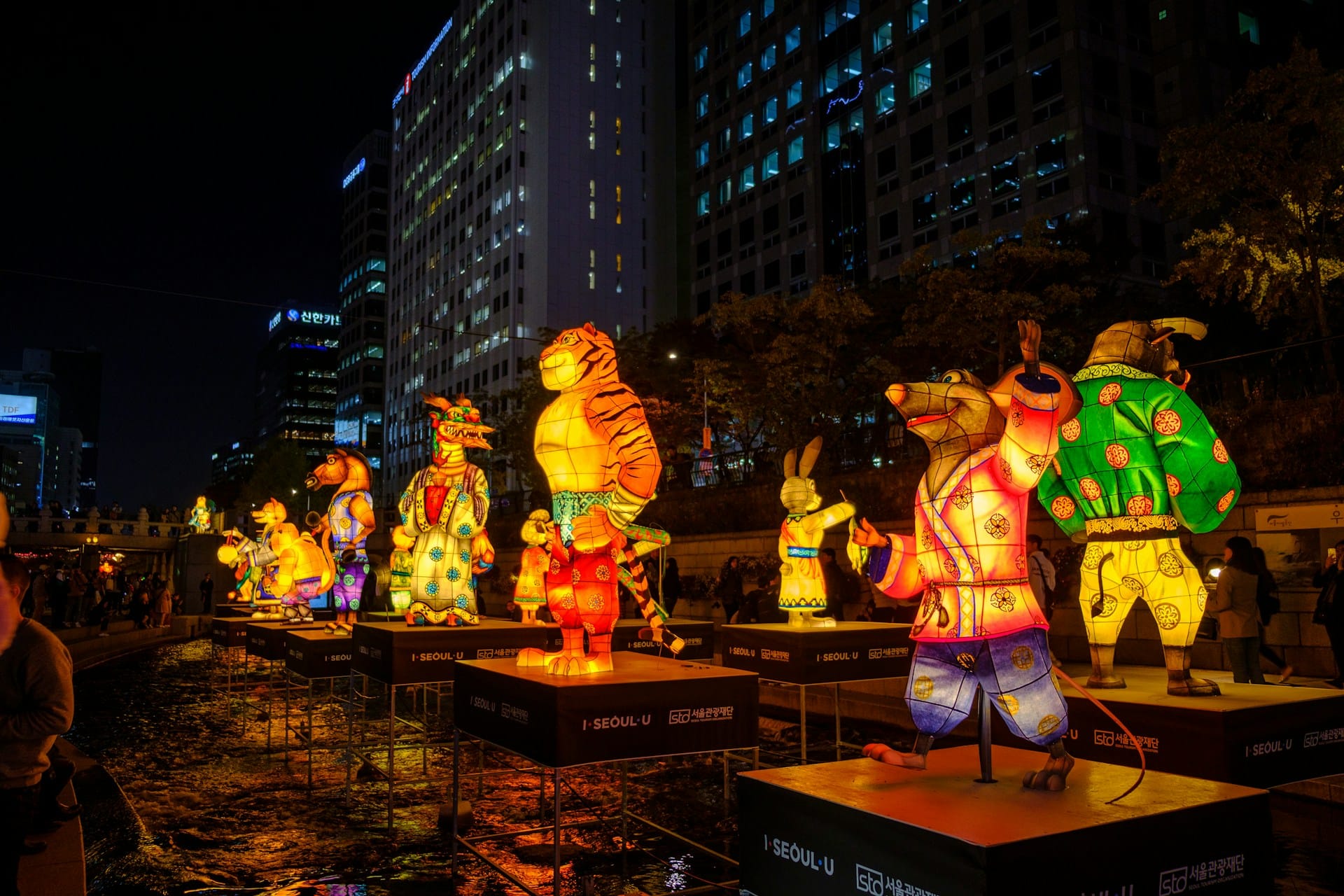
Yeondeunghoe — the Lotus Lantern Festival — happens in spring, timed to Buddha’s Birthday on the fourth lunar month’s fifteenth day. In 2026, that fell in May. The Seoul Lantern Festival, an entirely separate cultural event with no Buddhist connection, happens along Cheonggyecheon Stream every November.
Both involve lanterns. Both happen in Seoul. Both photograph beautifully. The difference are origin, timing, participation options, and historical weight. If you are reading this guide because you want the Buddhist festival with the parade and the lantern-making workshops, you want Yeondeunghoe in spring. Mark the date now and do not rely on a general Korea festivals search to surface it correctly. For the wider calendar, our guide to Korea’s best festivals for foreign visitors covers what runs when.
What Is Yeondeunghoe, and Why Does the UNESCO Designation Matter?
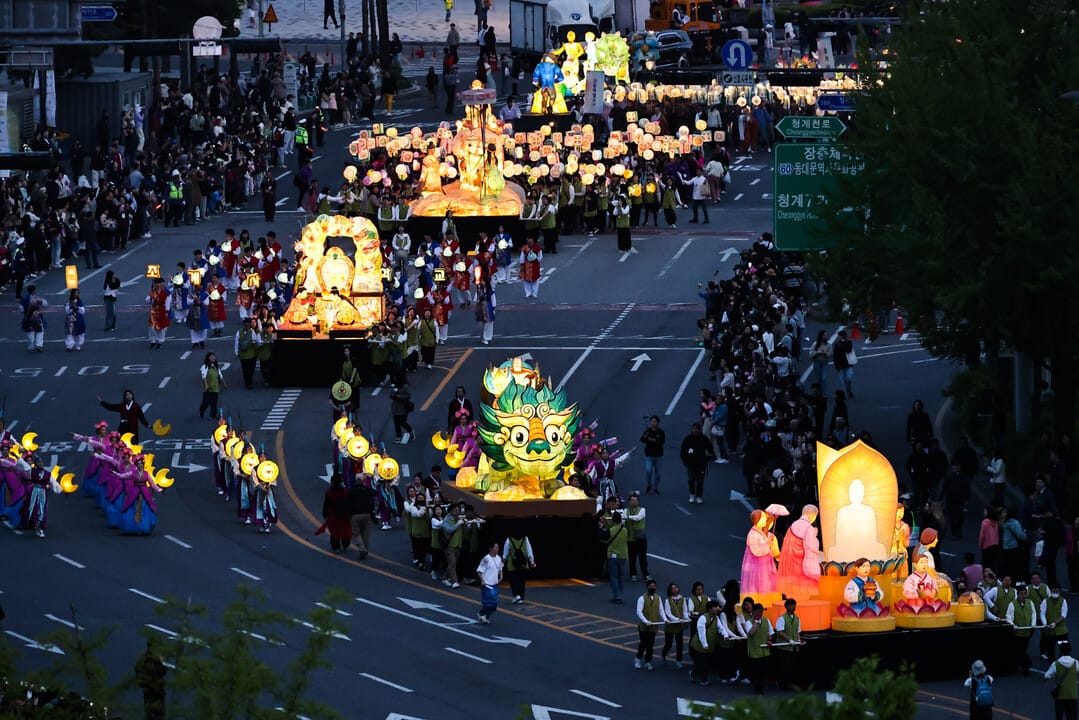
Yeondeunghoe is a 1,200-year-old Buddhist celebration. The UNESCO designation is recognition of a continuous living practice.
The practice of lighting lanterns to mark Buddha’s Birthday reached the Korean peninsula during the Three Kingdoms period. The name Yeondeunghoe appears in Goryeo Dynasty records, when it operated as an official state ceremony with royal participation. In 2020, UNESCO added it to the Intangible Cultural Heritage of Humanity list, making it Korea’s twenty-first such designation (Korea Heritage Service, 2020).
What the designation actually recognizes is the transmission: the practice of communal lantern-making, the prayers embedded in the construction, the procession as a collective act of devotion. That is still happening. When you attend Yeondeunghoe, you are participating in something that has been transmitted across twelve centuries.
The 2026 edition made headlines for including robot monks in the Seoul parade. Outside observers saw this as a spectacle. But it is consistent within the context of how Korean Buddhism has incorporated contemporary craft and technology into religious expression over the years.
Seoul or Busan: Which Festival Matches What You Want?
The honest answer is that these are not competing options. They serve different travelers, and the right choice depends entirely on what kind of night you want.
What Seoul Gives You
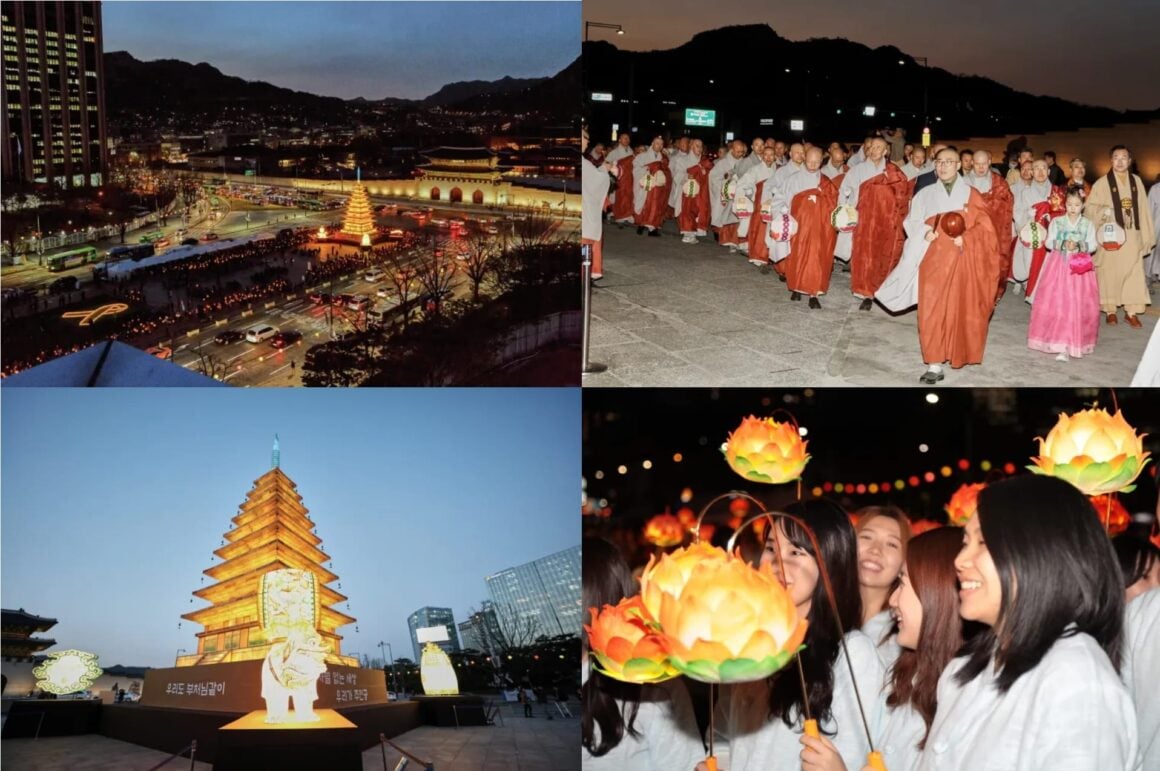
Seoul’s Yeondeunghoe is the flagship. Around 300,000 spectators attend annually (Korea Tourism Organization, 2026), and 2026 drew more than 500,000 Korean and international visitors along downtown streets. Over 50,000 marchers carried approximately 100,000 handheld lanterns through the city center (Korea Herald, May 2026).
The scale is the point. The parade moves along Donghwamun Road toward Jogyesa Temple through the heart of the city, so you are watching a river of light pass through Seoul’s main landmarks. The city-center setting means easy transport, abundant food options nearby, and the particular energy of a major urban event at full attendance.
What Seoul does not offer is intimacy. With 300,000 to 500,000 people sharing a city-center route, the experience is communal and spectacular, not quiet or contemplative. Arrive early for a good spectator position. Expect crowds that take genuine management.
Choose Seoul if: you want the full parade, the option to march, maximum scale, and easy logistics.
What Busan Gives You
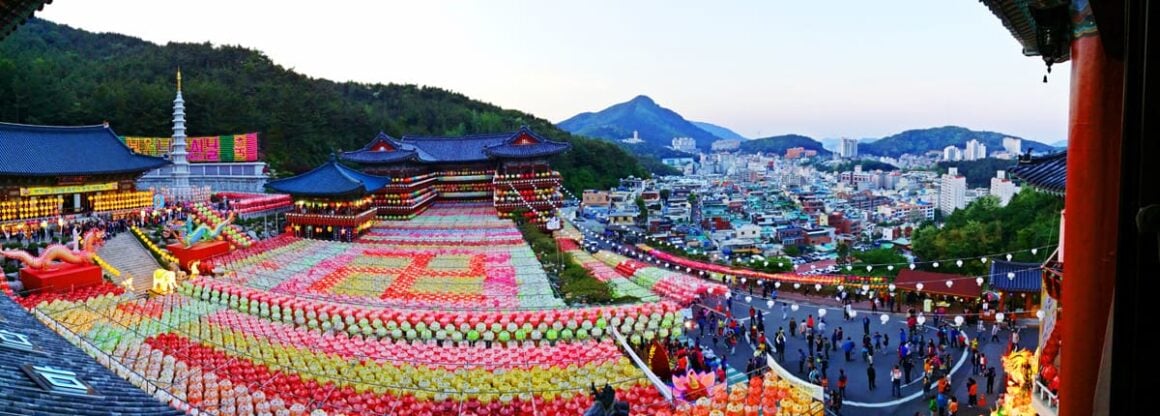
Samgwangsa Temple in Busan offers something structurally different. The temple sits in a mountain valley above the city, which creates a natural acoustic and visual experience. Lanterns fill the hillside and the temple grounds rather than stretching along a boulevard. The mountain setting produces an atmosphere that is denser and more immersive than Seoul’s open-street format.
The Busan festival draws a smaller crowd than Seoul, which is either a drawback or an advantage depending on what you are after. If the scale of Seoul feels overwhelming, or if you want an experience that feels less like a civic event, Samgwangsa is the version to choose.
Choose Busan if: you want atmosphere over spectacle, a mountain-temple setting, and a smaller crowd.
One practical note: if your trip includes both cities, the festivals do not run on the same night. Check the official calendar at llf.or.kr before visiting, as dates shift with the lunar calendar.
How Do You Actually March in the Seoul Parade?
Foreign visitors can march as full participants — not observers — but the registration window is narrow and the spots fill fast.
The path in runs through the lantern-making workshops held in the days before the parade. Sessions are capped at 108 participants, a number chosen deliberately because 108 represents the afflictions in Buddhist philosophy. The workshop fee runs approximately ₩5,000 to ₩15,000 depending on the lantern type you make (OneulKorea, 2026; letseoul.com, 2026). You make your lantern. You carry it in the parade.
How to Register
Registration for foreign volunteer parade participants opens through the official festival website at llf.or.kr. The opening date typically falls several weeks before the festival; monitor the site from January onward in the year you plan to attend. Spots across all 108-person sessions go quickly once registration opens.
For the workshop without parade participation, options are more flexible. Jogyesa Temple and the Lotus Lantern Festival cultural program offer sessions during the festival period, and these tend to have somewhat more availability than the parade-linked workshops. Check llf.or.kr for the full schedule once it publishes for
What to Expect on Parade Night
The parade departs from Dongdaemun and moves toward Jogyesa Temple. Marchers are organized into groups, and foreign participants typically join a designated international contingent. You will carry the lantern you made. The walk takes roughly ninety minutes to two hours at the pace of a large procession.
Wear comfortable shoes. Dress in layers — May evenings in Seoul are cool enough that standing or slow-walking for two hours requires more than summer clothing. The lantern you carry is lit with an LED insert, not an open flame, so there is no handling risk.
After the parade ends at Jogyesa Temple, lanterns are released or placed as offerings. The temple itself is worth time both before and after the parade.
How to Watch Without Marching
Spectating the Seoul parade is logistically straightforward, but position matters considerably.
Best Spots to Spectate and Watch
The parade route runs from Dongdaemun through central Seoul to Jogyesa Temple. The stretch near Jogyesa Temple at the route’s end draws the densest crowds and the most compressed viewing conditions. The middle sections of the route — roughly between Dongdaemun and Insadong — tend to offer better sightlines without requiring the earliest arrival. If you are positioned near Insadong with time before the parade, our locals’ picks from Insadong is a worthwhile detour.
Arrive at least ninety minutes before the official parade start to secure a standing position with a clear view. The area fills faster than most first-time attendees expect.
Getting There and Away
Jogyesa Temple is a short walk from Anguk Station on Line 3. Jongno 3-ga Station on Lines 1, 3, and 5 serves the broader parade area. On parade night, Seoul Metro adds additional train frequency on the relevant lines; check the official timetable at the Seoul Metro website in the week before the event.
Avoid driving. The parade route and surrounding streets are closed to vehicles, and parking near the route is effectively impossible during peak hours
The Cheonggyecheon Exhibition
Separate from the parade, the Cheonggyecheon Stream lantern exhibition runs for several days around Buddha’s Birthday. Thousands of lanterns line the stream corridor from Gwanghwamun toward the east, and this is the section that produces the photographs most associated with Yeondeunghoe internationally.
The stream exhibition is open during the day but best experienced after dark, from roughly 7 PM onward. It is less crowded than the parade route and considerably easier to navigate for visitors with children or those who want a quieter engagement with the festival.
What Else Can You Do During the Festival Period?
Yeondeunghoe runs for several days around Buddha’s Birthday, not just the parade night. The surrounding program is worth building into your trip.
The Templestay program, run by the Jogye Order of Korean Buddhism, allows visitors to stay overnight at participating temples and experience daily monastic practice. In 2025, the program recorded 349,219 participants — a record high — including 55,515 foreign visitors, a 5.1% increase from 2024 (Jogye Order of Korean Buddhism, reported by Korea Herald, February 2026). Jogyesa Temple in Seoul and Samgwangsa in Busan both run Templestay programs, and the festival period is one of the more meaningful times to participate given the broader ceremonial context. Our cultural experiences worth planning a Korea trip around puts Templestay alongside its peers.
Jogyesa Temple also hosts dharma talks, cultural performances, and traditional tea ceremonies during the festival days. Most of these are free or low-cost, and they offer a way to engage with the festival’s Buddhist substance rather than only the visual spectacle.
FAQ
Yeondeunghoe falls on the fifteenth day of the fourth lunar month, which typically lands in May on the Gregorian calendar. The exact date shifts each year. In 2026 it fell in May; check llf.or.kr from January onward for confirmed dates each year. The Seoul Lantern Festival, a separate event, happens in November.
No. Seoul hosts the largest celebration, drawing around 300,000 spectators annually (Korea Tourism Organization, 2026). Busan’s Samgwangsa Temple holds a distinct version with a mountain-valley setting and a smaller, more atmospheric crowd. Other temples across Korea also mark Buddha’s Birthday, though Seoul and Busan attract the largest international attendance.
Yes. Foreign visitors can march as full participants by registering for a lantern-making workshop capped at 108 spots per session — a figure chosen because 108 represents the afflictions in Buddhist philosophy. Registration opens through llf.or.kr, typically several weeks before the festival. Spots go quickly once registration opens.
Not exactly. Yeondeunghoe is inscribed on the UNESCO Intangible Cultural Heritage of Humanity list, which recognizes living practices rather than physical sites. It received this designation in 2020, becoming Korea’s twenty-first intangible cultural heritage listing. The distinction matters: the festival is recognized as a continuously transmitted human practice, not a preserved artifact.
Very. The 2026 edition drew more than 500,000 spectators along downtown boulevards (Korea Herald, 2026), with 50,000 marchers carrying approximately 100,000 handheld lanterns. Arrive at least ninety minutes early for good spectator positioning. If large crowds are a concern, Busan’s Samgwangsa offers the same festival in a smaller, more contained setting.
Dates, registration windows, and program details shift year to year with the lunar calendar. Verify all dates and registration information at llf.or.kr before planning your trip.


